EV Connector Assembly Inspection System
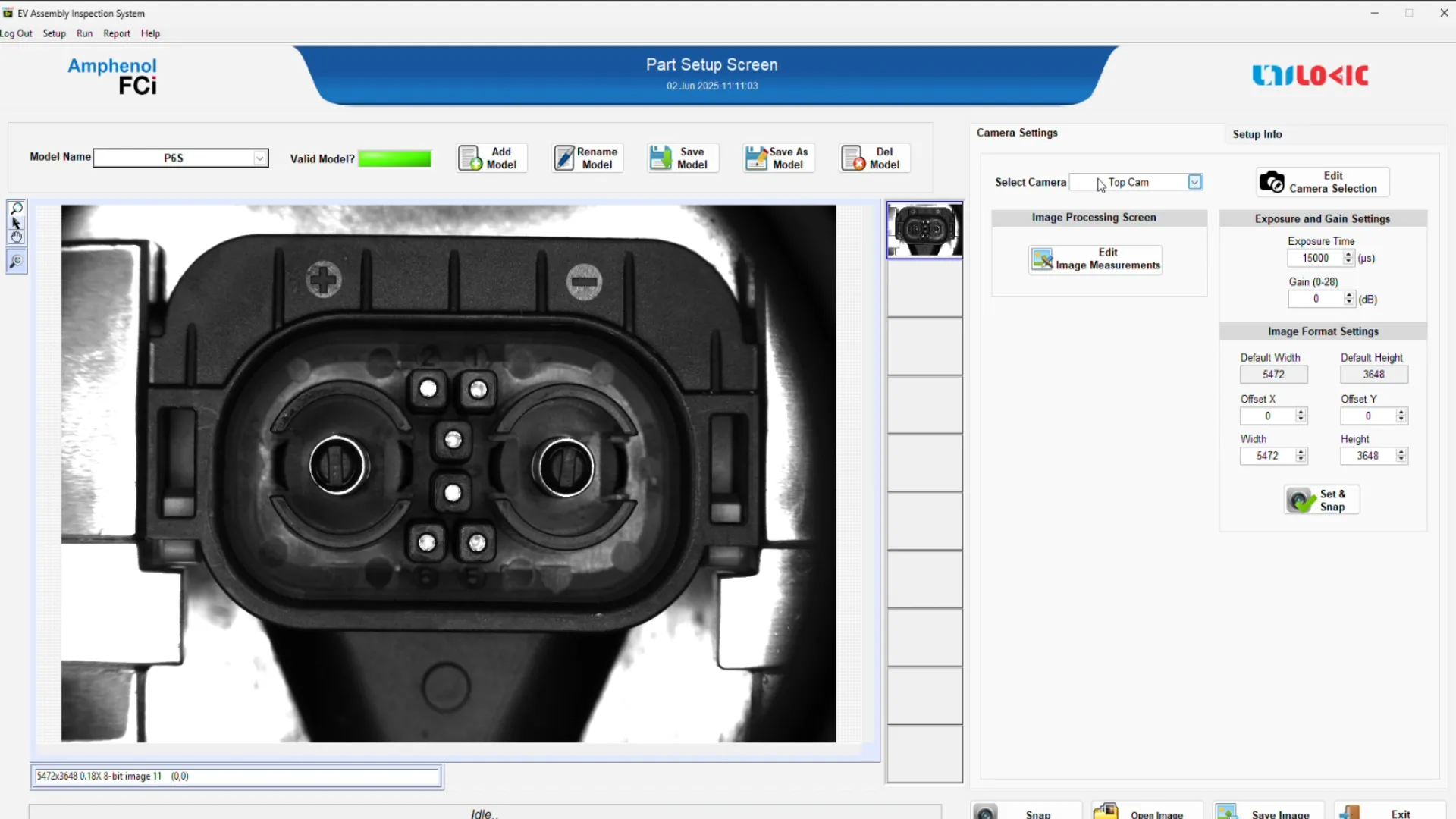
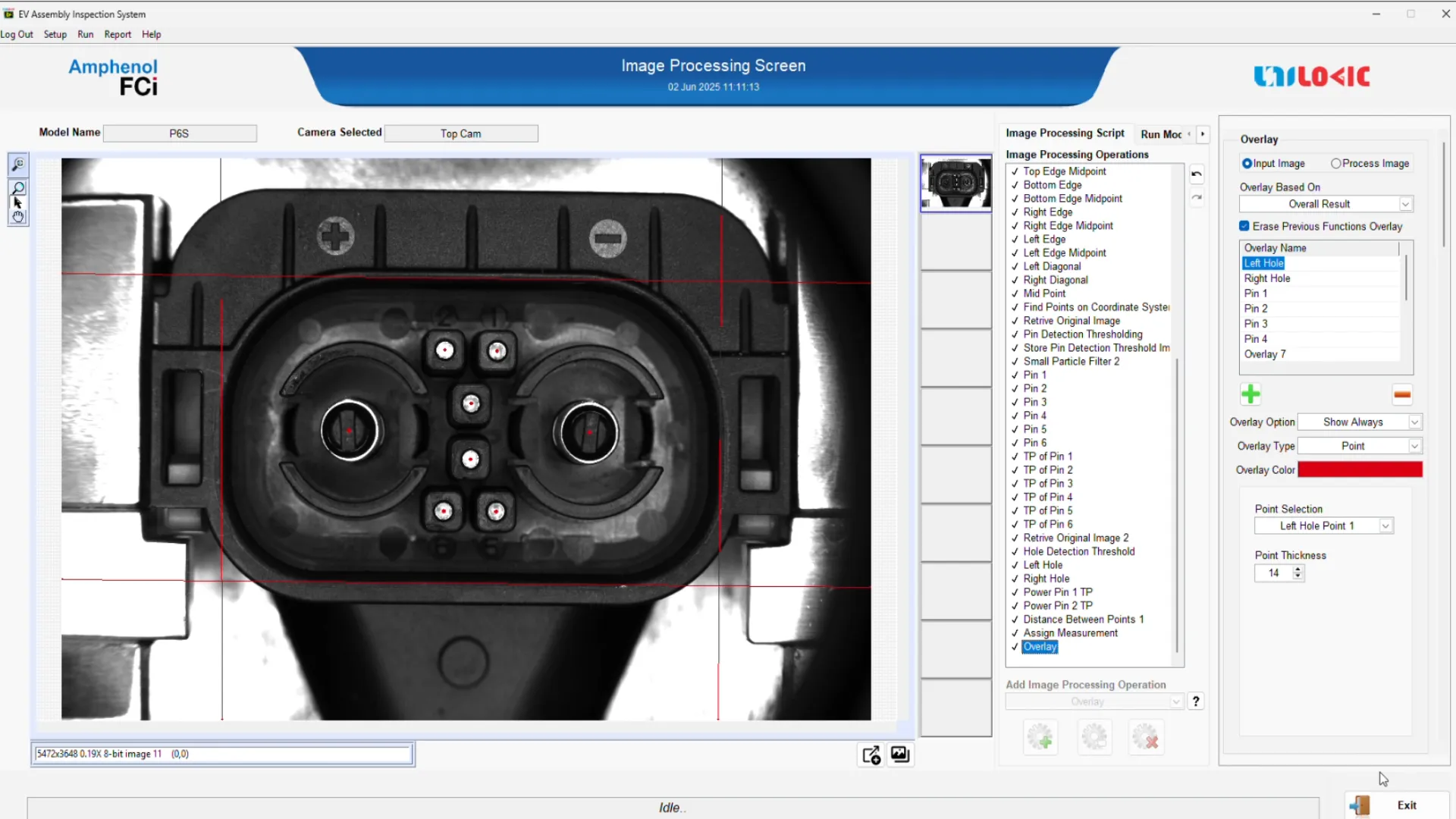
In the domain of Electric Vehicle (EV) connector assembly, conventional manual inspection methods often lack the precision, repeatability, and throughput required for modern manufacturing environments. These limitations can lead to inconsistencies in quality control and an increased risk of defective components progressing through the assembly line.
To address these challenges, a high-precision vision inspection system has been developed to ensure reliable and repeatable inspection of EV plugs. This system leverages custom-engineered machine vision software integrated with high-performance vision hardware to deliver consistent inspection results.
The inspection system is equipped with a high-resolution area scan camera coupled with front-lit LED illumination, providing superior image clarity and contrast. This setup enables accurate detection of micro-level dimensional deviations. The software performs critical geometric inspections, including:
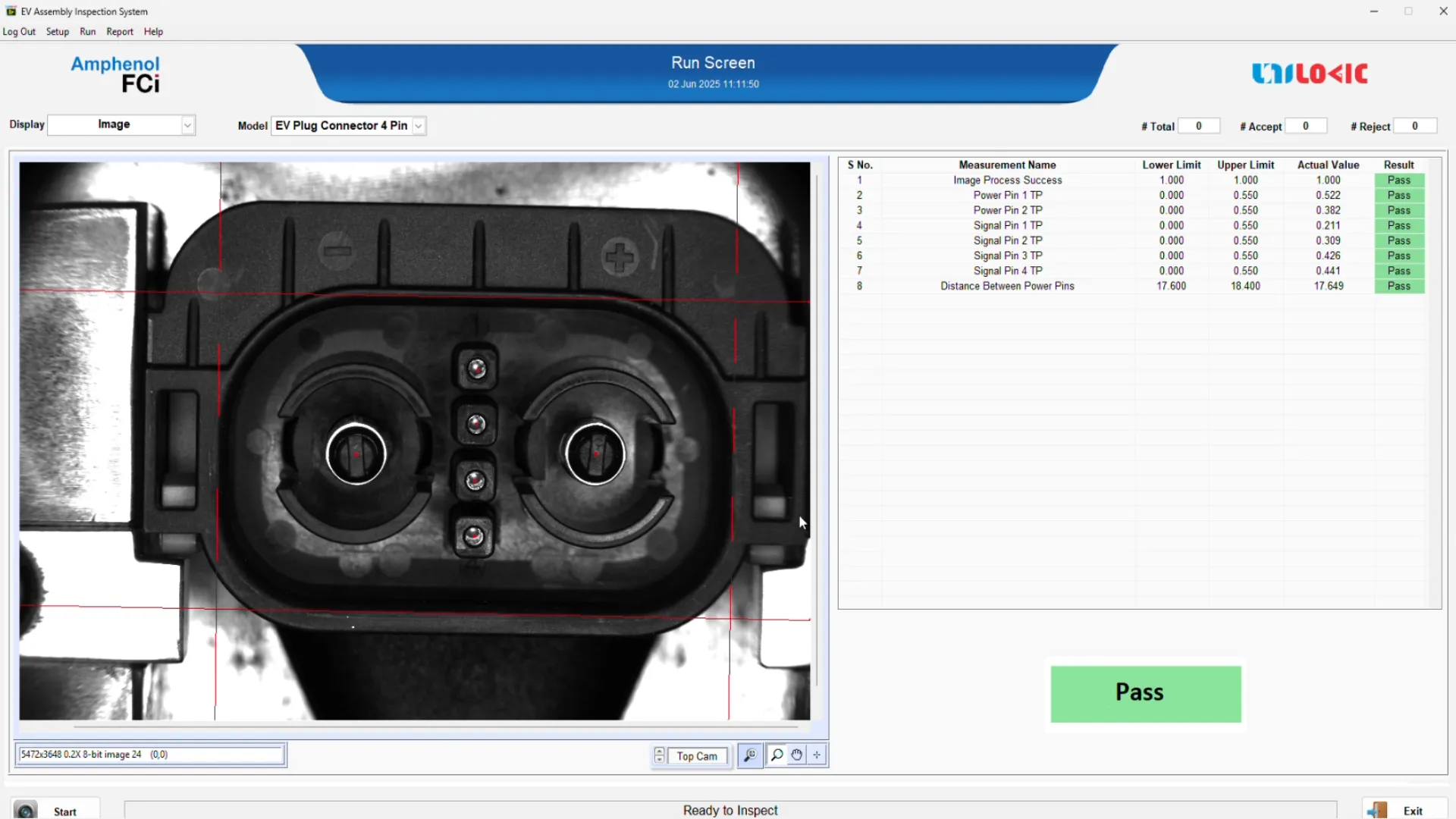
- Pitch measurement between power pins with micron-level accuracy to ensure alignment within specified tolerances.
- True Position (TP) verification of signal pins, using sub-pixel edge detection algorithms to measure deviations from the nominal positions.
The vision algorithm includes multiple layers of verification using edge detection, contour analysis, and geometrical fitting to enhance detection robustness and minimize false positives. The system supports image calibration and distortion correction, ensuring high measurement accuracy even under varying environmental conditions.
This solution significantly enhances the overall yield, reduces manual inspection effort, and supports Industry 4.0 integration through real-time data logging, traceability, and analytics features.
| S.no | Parameter | Typical Value or Range | Comments |
|---|---|---|---|
| 1 | Machine Inspection Speed (Parts per Second) | 1 | Discrete Inspection System - Manual load and unload |
| 2 | Front Camera - Image Resolution | 10 um | Based on 20MP area scan camera with a 60mm FOV |
| 3 | No of Area Scan Cameras | 1 | - |
| 4 | Connector Orientation | 0 to 20 degree | Within this inspection angle, all required parameters can be accurately evaluated without the need to adjust or disturb the existing vision setup |
| 5 | Pin Deflection | 0 - 0.550mm | The deflection range of the true position of the pin with respect to the connector reference |
| 6 | Power Pin Pitch | 17.6mm - 18.4mm | The maximum pitch difference must be 0.8mm |
Key Features:
- Inspection speed: 1 part per second (Speed is limited to manual loading and unloading)
- User authentication for multi-level access
- Configurable image processing functions
- Editable defect parameter thresholds
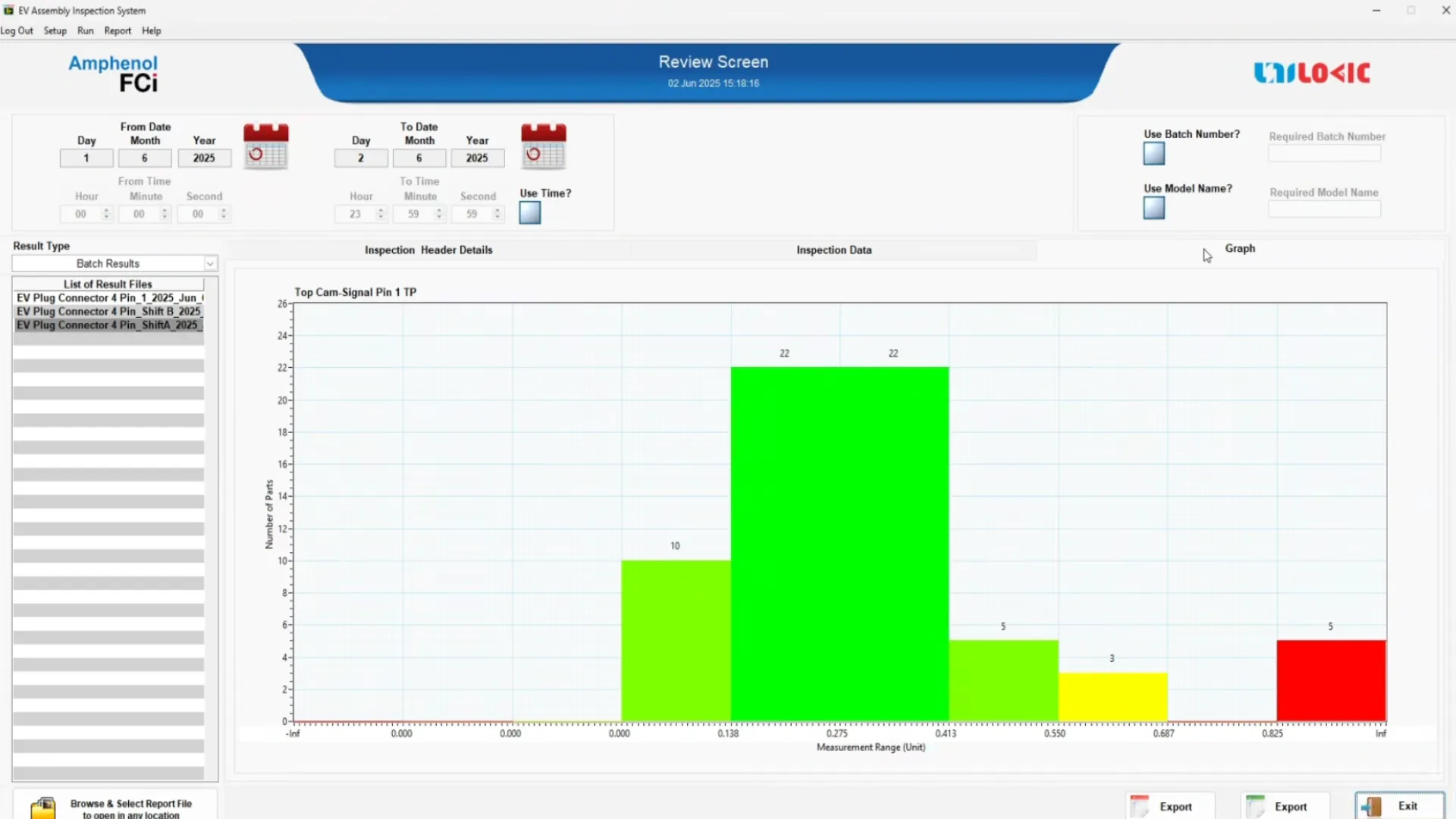
- Report generation in Excel, PDF, with SPC reports and bar charts
- Integration-ready with production lines
Benefits
- Customizable scripts to adapt to all kinds of inspection needs
- Single-operator usability
- Automatic report generation and data logging
- Secure access to batch-wise inspection reports
Conclusion
The introduction of the discrete inspection vision system has revolutionised the EV plug assembly Inspection process, overcoming the limitations of manual inspection methods. With its efficient operation, comprehensive defect detection, and customised machine vision software, this system ensures the delivery of high-quality products while optimising production speed. Its ability to handle diverse seal dimensions to its versatility and suitability for different manufacturing settings.