Hardware-in-the-Loop (HIL) Testing for Automotive Audio System
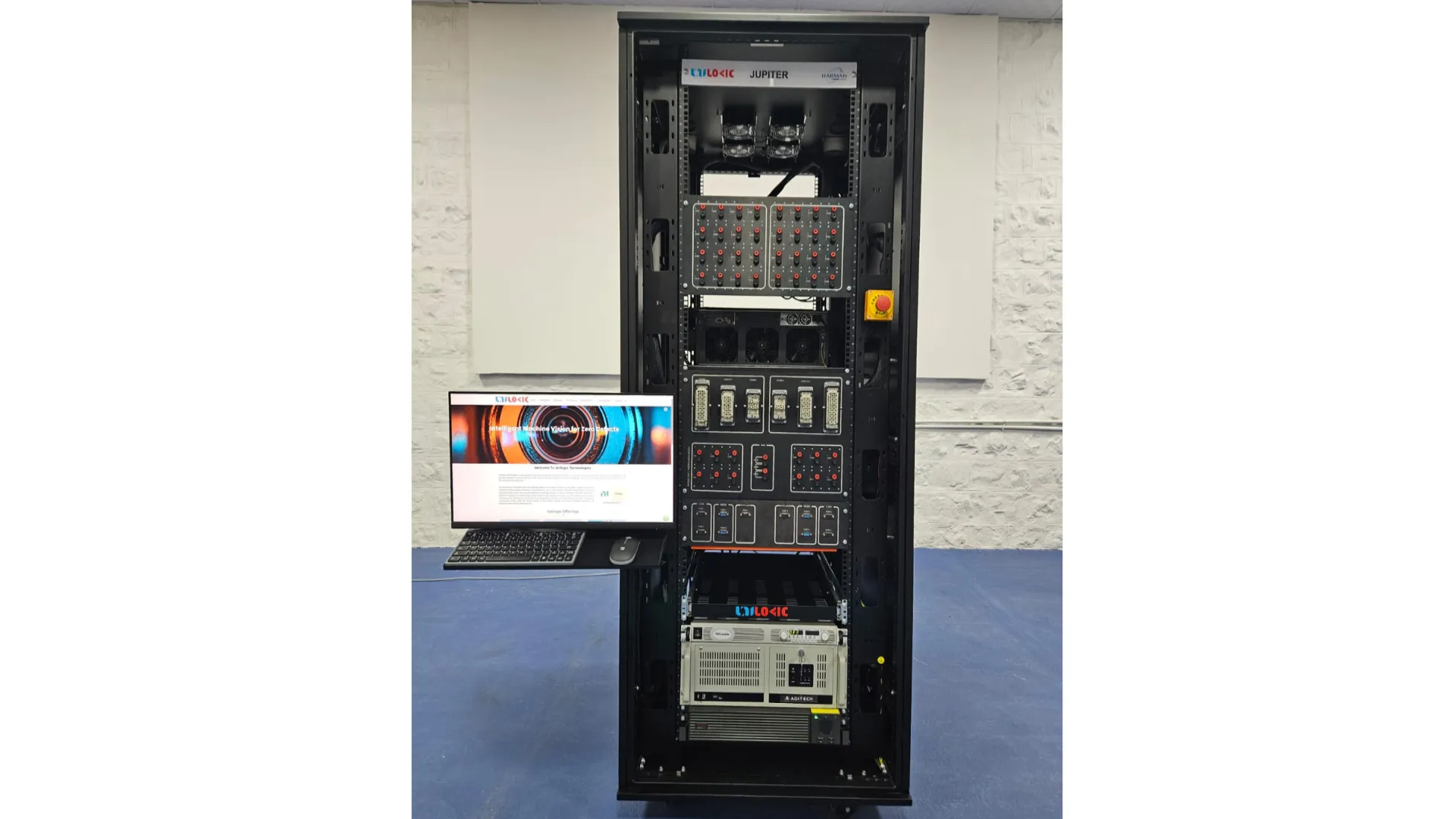
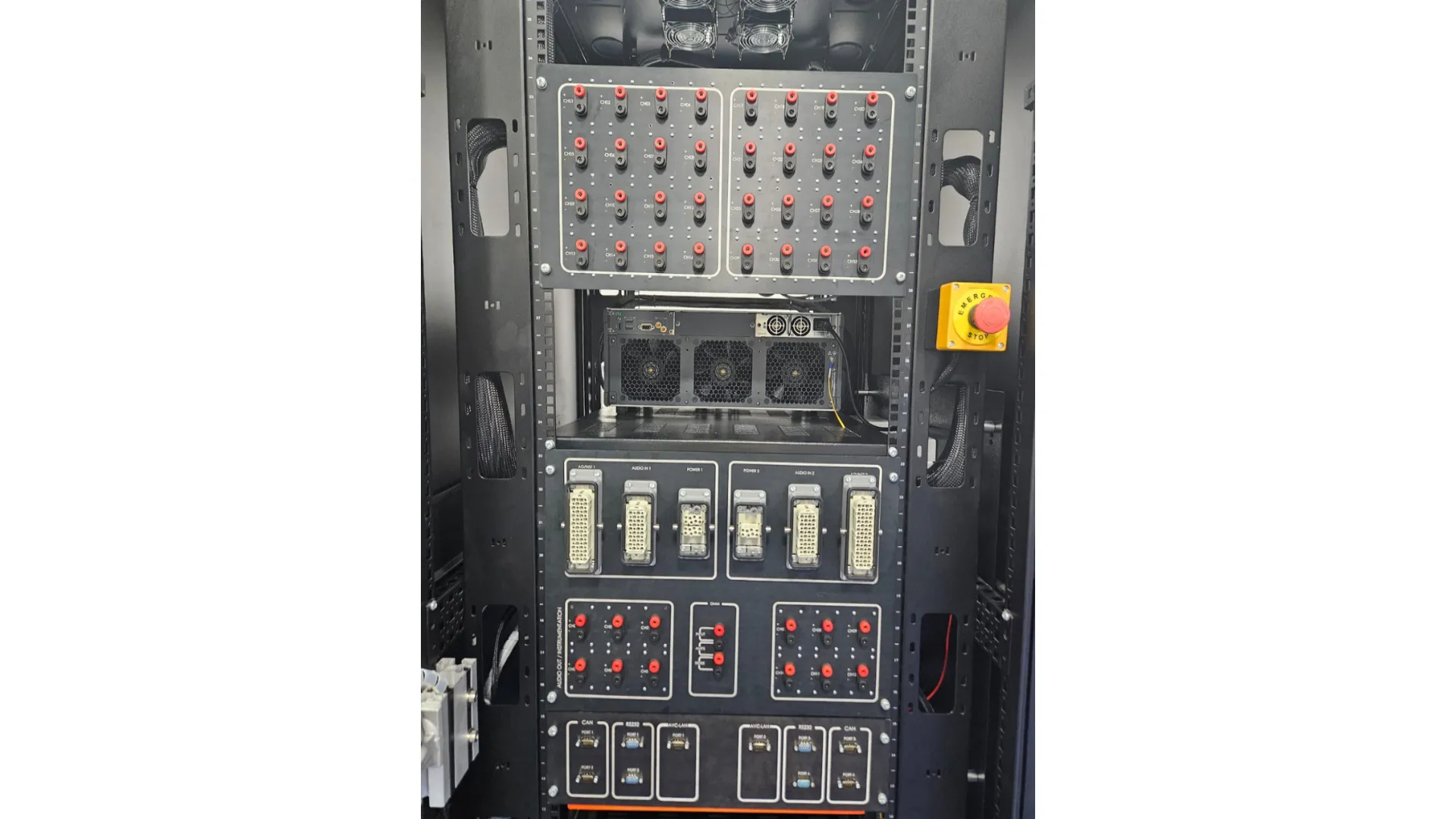
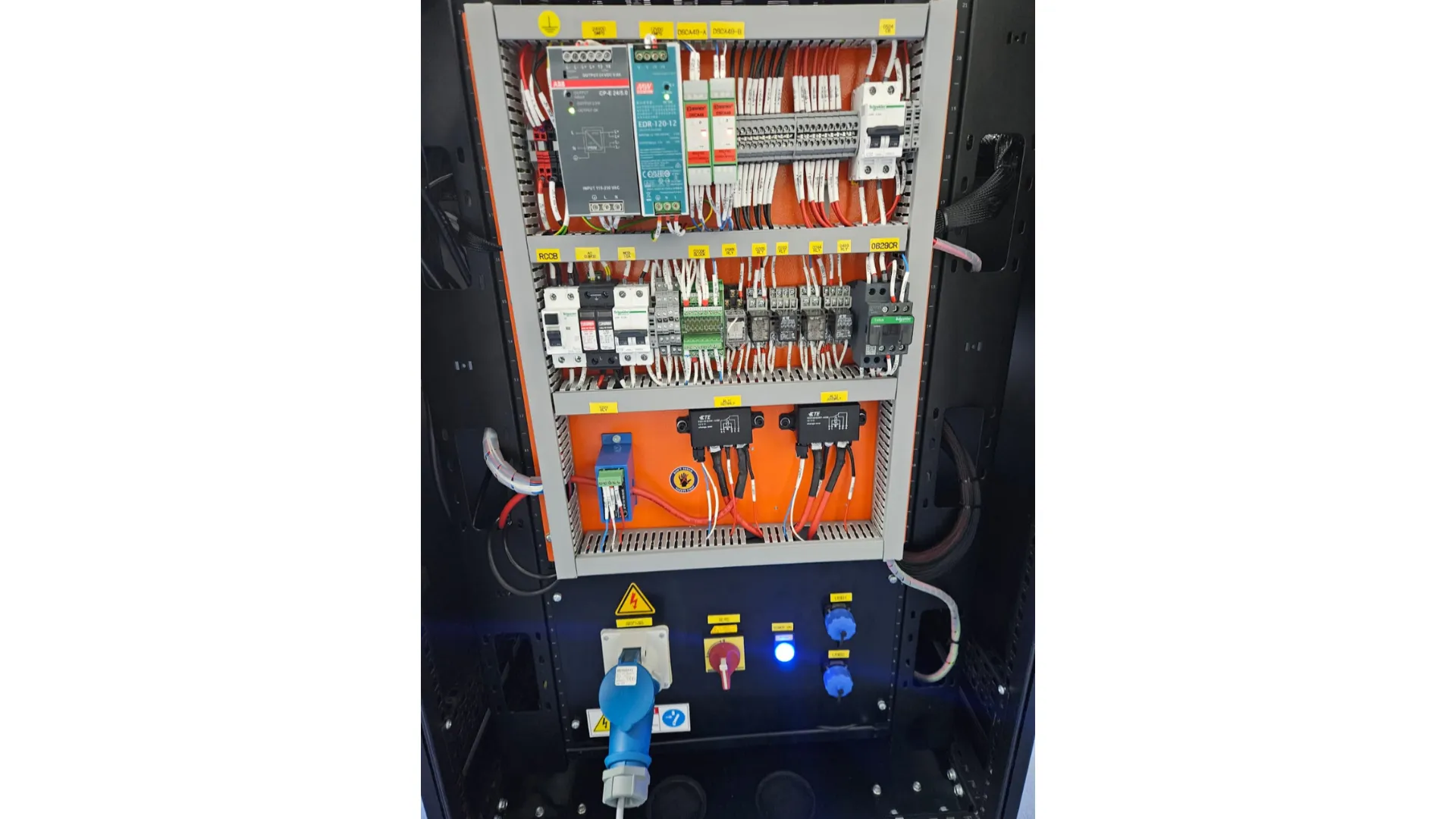
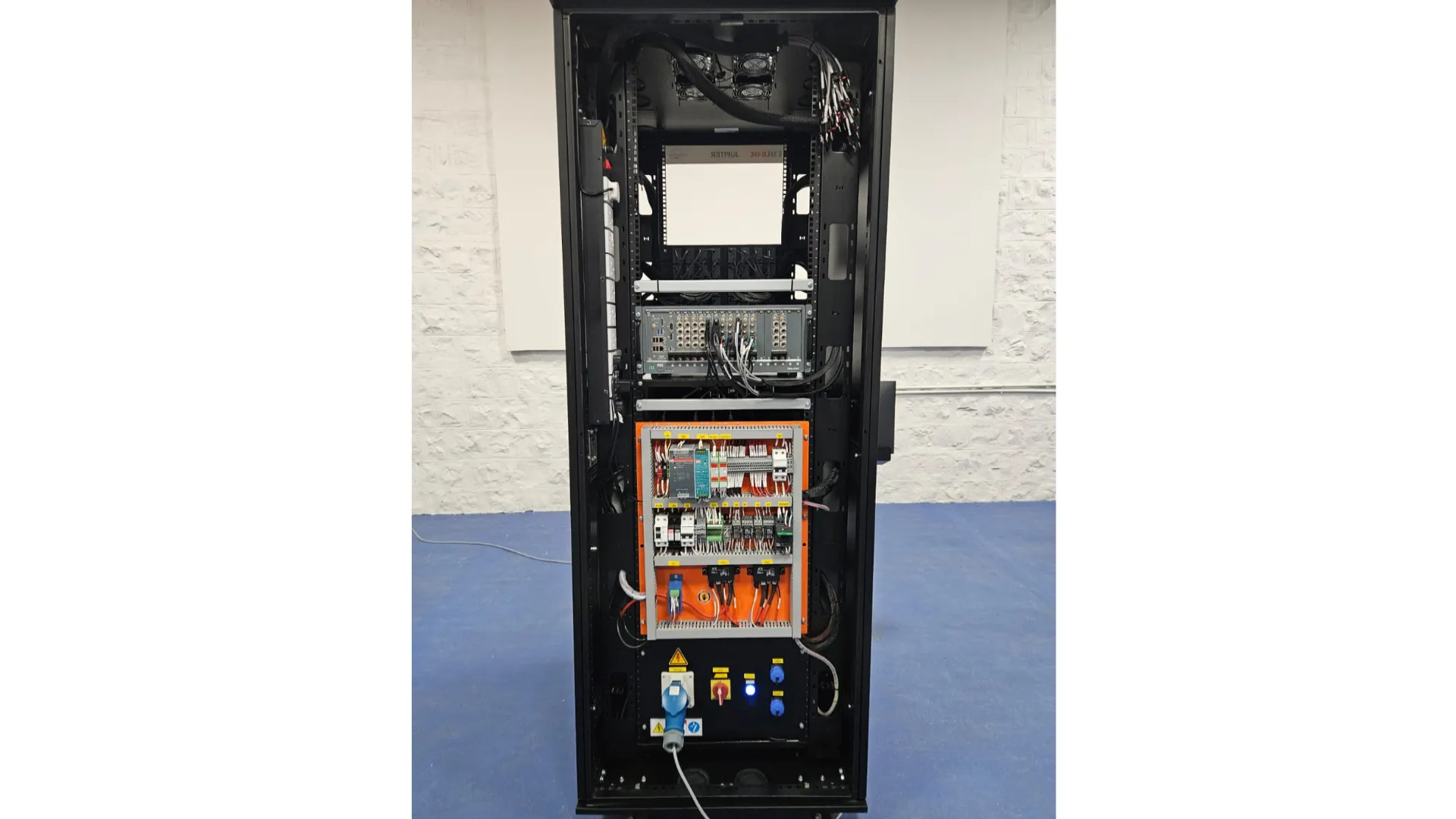
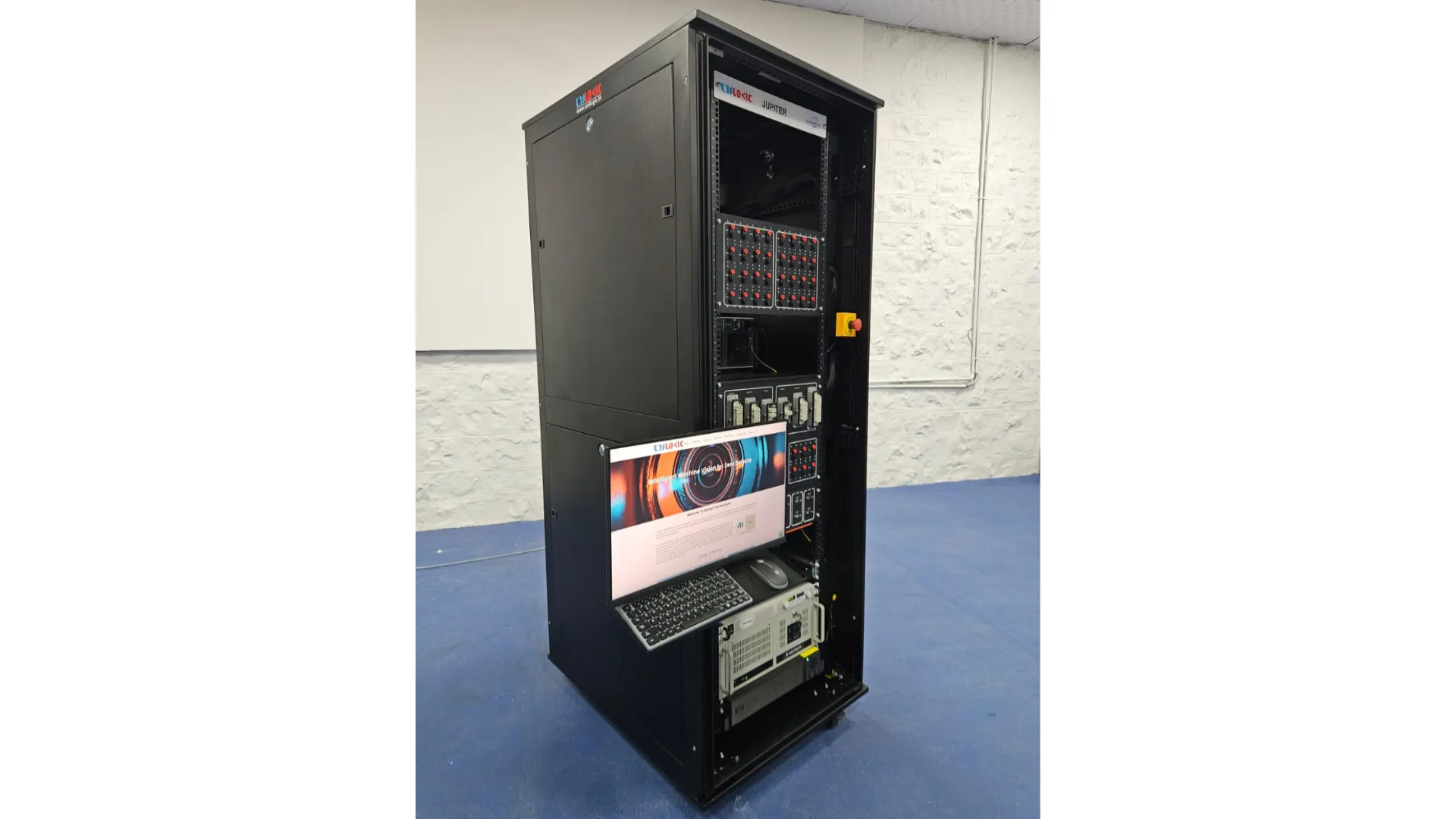
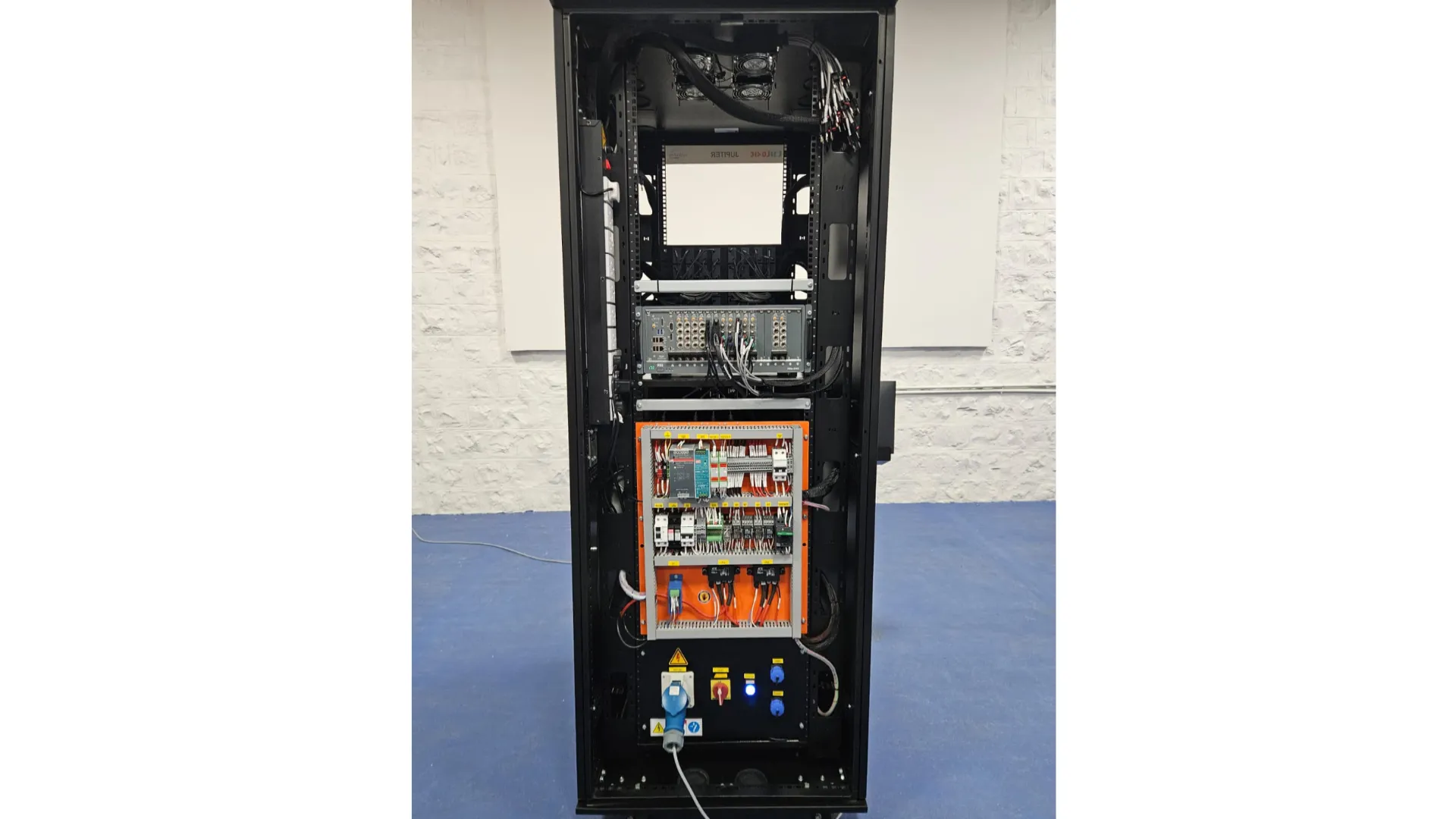
As automotive infotainment systems evolve to offer high-fidelity sound and seamless integration with vehicle networks, validating audio amplifiers becomes increasingly complex. To meet the demands of precision, repeatability, and scalability in testing, we developed a custom Hardware-in-the-Loop (HIL) tester designed specifically for automotive audio amplifier validation. This system enables functional, performance, and reliability testing of amplifiers under simulated vehicle operating conditions, ensuring compliance with industry standards and OEM specifications.
System Specifications:
| Component | Specification |
|---|---|
| Analog Inputs | 32 channels |
| Analog Outputs | 8 channels |
| PWM Outputs | 2 channels |
| Relay Control | 16 relays |
| Digital I/O | 48 channels (configurable) |
| DMM | 1 integrated channel |
| CAN Ports | 4 high-speed channels |
| Software Tools | NI LabVIEW, NI TestStand, NI VeriStand |
| Communication Protocols | CAN, LIN (extendable), Analog, Digital |
| Test Modes | Manual, Automated, Continuous |
Challenges:
- Testing multi-channel audio systems with synchronized analog and digital signals.
- Simulating various vehicle conditions (e.g., ignition states, battery voltage fluctuations, speaker load simulations).
- Capturing transient and intermittent faults during functional and endurance testing.
- Managing large volumes of test data for traceability and analysis.
- Integrating with OEM-specific communication protocols and diagnostic frames.
Key Features:
- Comprehensive Signal Coverage: Ability to simulate speaker loads, inject faults, and measure amplifier response across all channels.
- Integrated Test Automation: Powered by NI TestStand, enabling complex test sequences, decision logic, and reporting.
- Real-Time Simulation: Using NI VeriStand for deterministic signal generation and real-time fault injection.
- Modular and Scalable Design: Easily extendable for different amplifier models or future projects.
- CAN-Based Communication: Simulates vehicle ECUs and sends diagnostic messages to verify amplifier compliance.
- High Precision Measurements: DMM integration for accurate voltage and current monitoring on amplifier outputs.
Benefits:
- Accelerated Development Cycle: Reduced test time through automation and parallel testing.
- Improved Test Coverage: Identification of defects that were previously difficult to simulate or detect.
- Repeatability and Reliability: Ensures consistency across multiple test cycles and environments.
- Early Defect Detection: Enables fault injection and boundary condition testing without damaging actual components.
- OEM Compliance: Facilitates validation against OEM-specified standards and protocols.
- Data-Driven Decision Making: Comprehensive test logs and reports aid in debugging and product improvement.
Types of Defects Identified:
- Audio Distortion and Clipping: Detected under various load and supply voltage conditions.
- CAN Communication Failures: Including missing or malformed diagnostic responses.
- Channel Mismatch: Incorrect routing or unequal gain across speaker channels.
- Short Circuit and Open Load Conditions: Simulated and detected through controlled relay matrix.
- Overheating Simulation Response: Verifying amplifier thermal protection mechanisms.
- PWM Noise and Ripple Issues: Validated via precise analog input capture.
Conclusion:
The developed HIL tester stands as a robust, flexible, and high-performance solution for automotive audio amplifier validation. By integrating the power of NI LabVIEW, NI TestStand, and NI VeriStand, the system bridges the gap between real-world performance and lab testing, helping OEMs and Tier-1 suppliers to deliver superior audio systems with confidence. The success of this solution demonstrates our expertise in building customized HIL test systems that combine signal simulation, real-time testing, and comprehensive automation — enabling faster time-to-market and improved product reliability.